Lambrate
Architecture, landscape and innovation along the Lambro River
The history of Lambrate is closely linked to the Lambro river running through it.
Between the 8th and 9th centuries, two monasteries, later farmsteads, were built in this area., Of these only Sant’Ambrogio remains today. At the same time, Benedictine monks began building the churches of San Martino and Saints Faustino e Giovita all’Ortica. Sixteenth-century frescoes with sacred representations, a pictorial fragment of the Ecce Homo and a 12th-century graffito testifying that the building was already a place of worship are still visible here.
During the 17th century, the area near the river became an aristocratic holiday resort, with the construction of a number of ‘construction villa’ still standing today.
Lambrate, whose village developed along via Conte Rosso, retained its rural characteristics until the construction of the Milan-Brescia railway, inaugurated in 1846. It favoured progressive industrialisation and urbanisation. An example of industrial archaeology linked to 20th century manufacturing expansion is the Innocenti area.
Linked to 20th century manufacturing expansion is the example of industrial archaeology represented by the Innocenti area
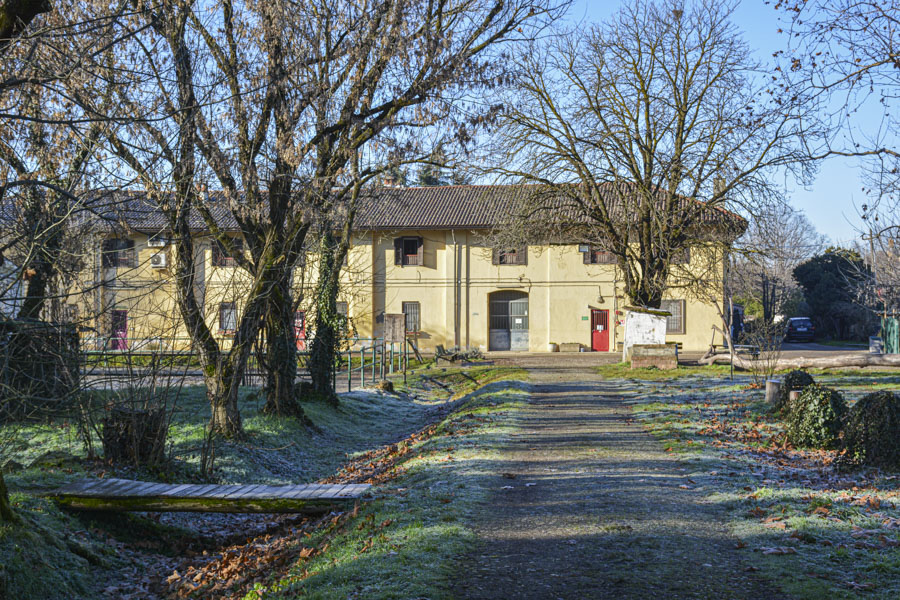
Several farmsteads, however, still mark the territory, most of them immersed in the Lambro Park, established in 1926.
At Ortica, since 2015, the history of the Italian 20th century has been painted on the walls in a sort of open-air museum, with street art works among the largest in Italy.