Baggio
Along the 'Path of the Soul', between tradition and identity
Baggio has preserved an identity that is linked to its cultural and rural past.
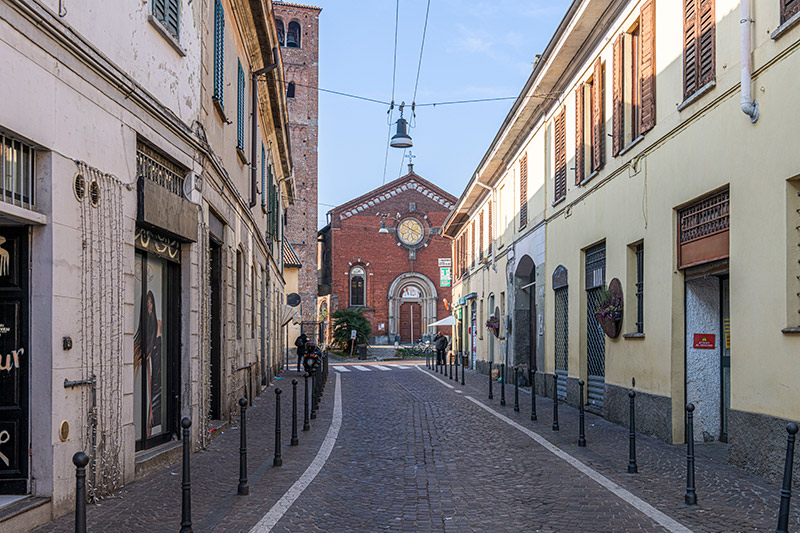
Of medieval origin is the Church of Sant’Apollinare, which is the symbol of the religious and cultural tradition of the ancient village.
The foundation of the Olivetan monastery of Santa Maria dates back to the Visconti period. Later it was transformed into a farmstead – cascina in Italian -, hence the name cascina Monastero given to the building, now the seat of Milan’s Municipio 7.
Historic fields and farmsteads are visible signs of the rural life that once took place in Baggio and that today largely characterize its appearance. Among them are Cascina Linterno (with Casa Petrarca), Cascina Meriggia, Cascina Molino del Paradiso, Cascina Guascona, Cascina Guasconcina). The karstic springs and the water meadows, which once fuelled agricultural activities, are another distinctive feature of the landscape.
Local initiatives contribute to keeping Baggio’s identity alive: the Baggio Festival, an annual event that has taken place since 1628, and the “Path of the Soul”, a route that, through the sequence of thirty-five majolica tiles, narrates the traditions and transformations of the village.