Greco Milanese
History and art from Cassina di Pomm to Sant'Antonino
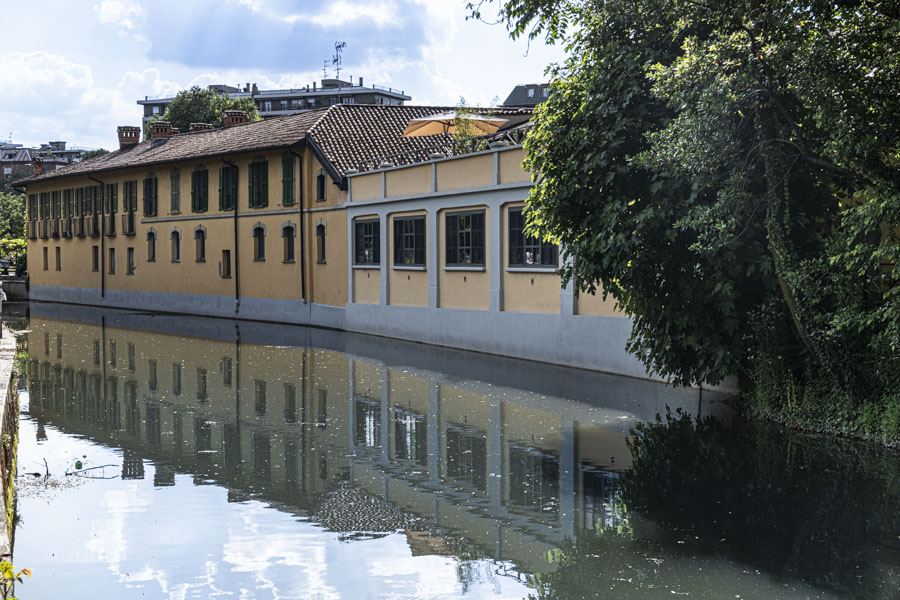
Thevillage of Greco, historically linked to the church of San Martino, prospered thanks to the area’s abundant water resources, which favoured the production of vegetables and fodder. Today, the most representative part of the ancient settlement corresponds to the cort di Pures (court of the Pulici, the name of the family that lived there), which has survived under the name Borgo Cascina Conti.
Following the construction of the Naviglio Martesana during the 15th century, the ancient small town of Cassina di Pomm took on particular importance, where an inn became a place of refreshment for travellers.
It was the construction of the Milan-Monza railway in 1840 that transformed Greco from a rural hamlet into the area’s leading industrial centre, to the detriment of the hamlet of Segnano. This is where the Church of Sant’Antonino stands, built in the late 16th and early 17th centuries by the Cassinese monks on an earlier 11th-century building. The interior is completely frescoed and dominated by a pictorial cycle that can be traced back to the Fiammenghini: on the right wall is a depiction of St Charles Borromeo among the Holy Bishops in adoration of the Virgin Mary holding the baby Jesus; on the left wall is a re-enactment of the famous Battle of Legnano in 1176.