Vigentino
A piece of Milan's history between agricultural tradition and urbanisation
The history of Vigentino is closely linked to the historical events of Milan. The event that shook its rural life dates to the destruction of the city by Frederick Barbarossa in 1162, when the inhabitants of Porta Romana and Porta Ticinese took refuge in the countryside, finding hospitality in the farmsteads south-east of Milan. It was here that they founded the village of Santa Maria where a devotional chapel dedicated to the Virgin was built. The present church, dedicated to Santa Maria Assunta, was rebuilt on the same site by the Hieronymites of Castellazzo in the late 16th century.
Around the end of the 19th century, the expansion of the city of Milan involved the northern part of Vigentino, which became an area of industrial and residential settlement, with numerous factories located south of the Porta Romana rail yard, founded in 1896.
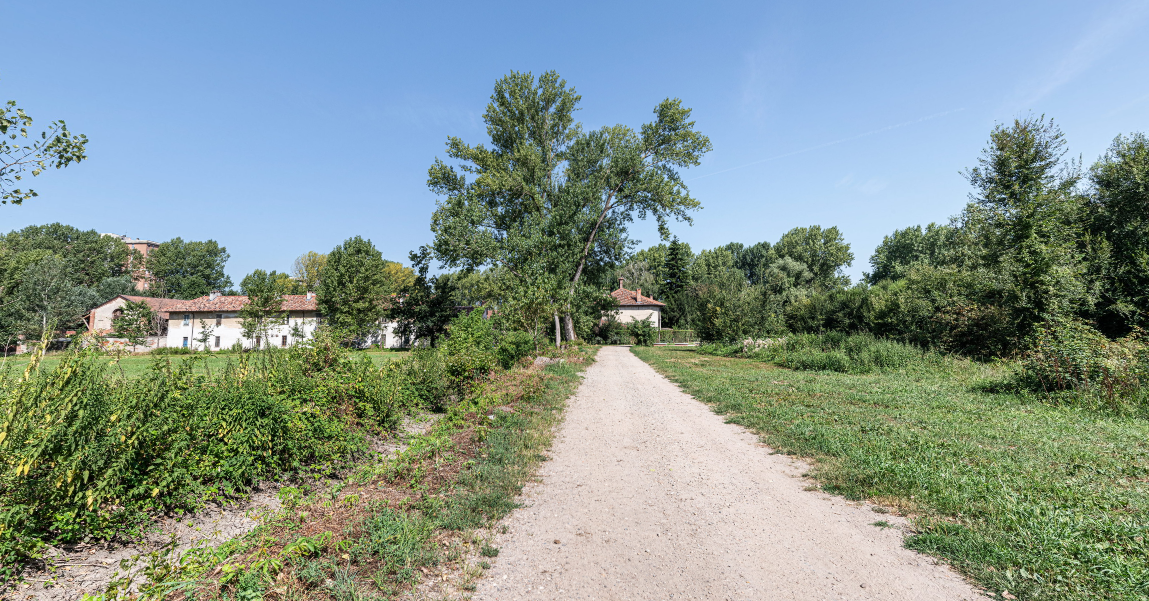
The southern part of the ancient municipality, with the districts of Quintosole, Vaiano Valle, Macconago and Selvanesco, retained instead its agricultural vocation, preserved to a large extent until today. An example can be found in Cascina Campazzo, with its fields immersed in the Park of Ticinello, reflecting the typology of the 19th-century closed court structure.