Gorla
The charm of the villas and the memory of the Little Martyrs
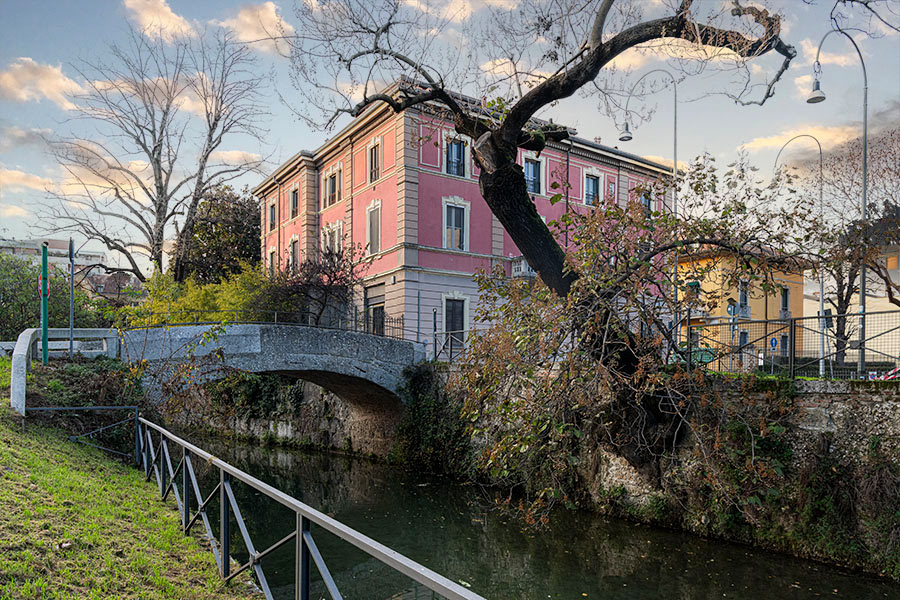
Thepast of Gorla is evoked by the images that accompany the route of the Martesana Canal. The canal, built in the 15th century, facilitated the transport of goods and the irrigation of fields, making the village a thriving rural community. Today there is still the old bridge, dating back to 1703, which was the only connection point between the two banks along the Precotto-Turro route.
The Naviglio Martesana also attracted the Milanese nobility, who built their country residences on its banks or nearby from the 17th century onwards. An example of this is villa Finzi, adorned with a large park, where the Temple of Night, built in the 19th century, is located. It was during this period that Gorla was given the nickname ‘Little Paris’.
The Naviglio Martesana crosses viale Monza, the road axis that, inaugurated in 1838, favoured connections between towns and the location of industrial activities.
It contrasts the image of the glamour of the villas with that of the drama of war. A short distance from the Naviglio Martesana is the square dedicated to the Small Martyrs with the monument by sculptor Remo Brioschi built in memory of a tragic event: the death of more than 200 people, including 184 children, as a result of the air raid on the ‘Francesco Crispi’ primary school on 20 October 1944.