Crescenzago
From the medieval village to the 'riviera' of the Naviglio coast
InCrescenzago history and art are concentrated in two areas: the village and a stretch of the Naviglio (canal) Martesana.
The origins of the present village along Via Berra are medieval, having developed around the church of Santa Maria Assunta, entrusted in 933 AD to the Canons Regular of the Lateran and rebuilt in the 12th century. The structure, which has retained its original Romanesque style, is rich in medieval frescoes and walls with Baroque decorations and religious symbols.
Opposite to the church is Casa Berra: with its medieval and 18th century Gothic appearance, it represents the outcome of the transformation from a pilgrims’ hospital, established by the canons, into a convent and then into the private residence of the landowner Domenico Berra. The building now houses a contemporary art collection.
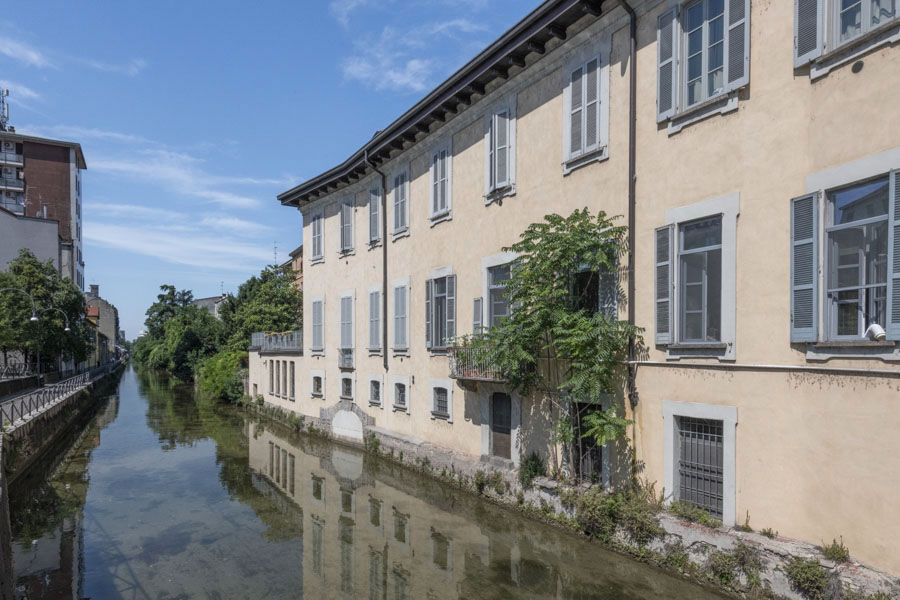
The Naviglio Martesana was built in the 15th century. The canal favoured trade and attracted Milanese aristocrats, who built a series of country residences between the old bridge in Piazza Costantino and Tre Case (Via Idro), transforming Crescenzago into a popular holiday resort. The mansions, lined up on the northern bank of the canal, formed the so-called ‘Riviera of Crescenzago’.